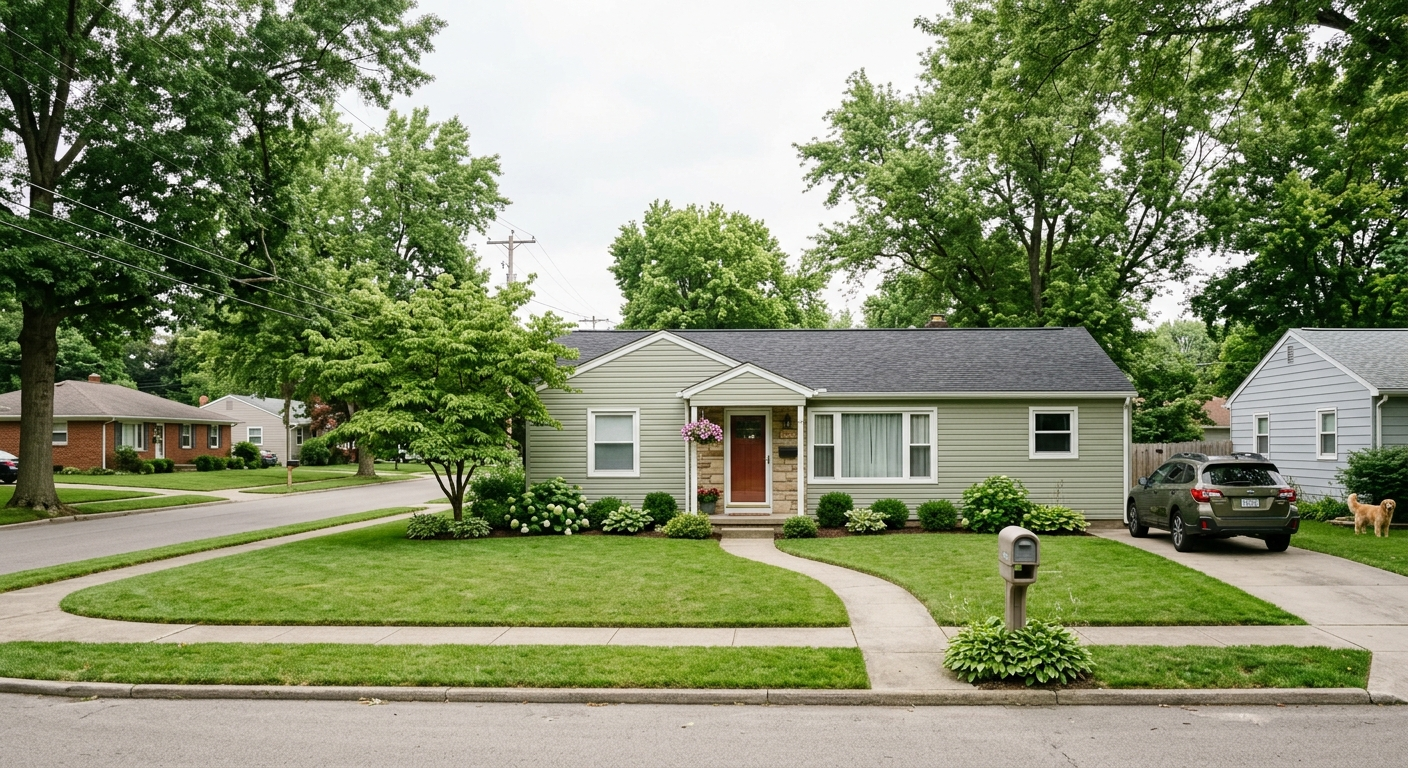
Bundling Home and Auto: Is It Worth It in Ohio?
Microphone ready
Schedule appointments or follow-ups
Speak to Anna 24/7
Anna
Start your custom insurance quote
Instant answers to your insurance questions
The Bundle Discount Promise for Ohio Policyholders
Insurance companies love to advertise bundle discounts. Save 15%, 20%, even 25% when you combine your home and auto insurance with one carrier. The ads make it sound like a no-brainer, and for many Ohio homeowners, bundling does save money. But here's what those commercials don't tell you: the lowest bundled price isn't always the best deal, and sometimes keeping your policies separate actually costs less.
The question isn't just about the discount percentage. It's about total cost, coverage quality, and whether you're giving up better protection somewhere else just to keep everything under one roof. A 20% discount on an overpriced policy still leaves you paying too much. And if that bundled policy excludes coverage you need, the savings quickly disappear when you file a claim.
Let's break down when bundling makes sense in Ohio and when you're better off shopping around.
How Multi-Policy Discounts Actually Work
Insurance carriers offer bundle discounts because customers who carry multiple policies tend to stay longer and file fewer claims. It's a retention strategy as much as a discount program. When you bundle home and auto, the carrier typically applies a percentage discount to one or both policies.
The discount structure varies by company. Some apply the full discount to your homeowners policy, others to auto, and some split it across both. The percentage usually ranges from 10-25%, with the average Ohio bundle discount sitting around 15-18%.
But that discount applies to the carrier's base rate, which might already be higher than a competitor's price. So a 20% discount from Carrier A might still cost more than no discount from Carrier B. The math matters more than the percentage.
What You're Really Saving in Ohio
Let's use real numbers. Say your homeowners insurance costs $1,200 annually and your auto insurance runs $1,400. That's $2,600 total. A 15% bundle discount saves you $390 per year, bringing your total to $2,210.
Now compare that to shopping each policy separately. Maybe another carrier offers homeowners for $1,100 and a different one quotes auto at $1,250. That's $2,350 total, no bundle discount needed. You'd still pay $140 more than the bundled rate.
But shift the numbers slightly. If unbundled homeowners is $1,000 and auto is $1,150, you're at $2,150, which beats the bundled rate by $60. And you might get better coverage in the process.
The point is this: you can't evaluate bundle discounts in isolation. You need actual quotes from multiple carriers, both bundled and separate, to see what saves you the most.
When Bundling Makes the Most Sense
Bundling works best when one carrier genuinely offers competitive rates on both your home and auto insurance. That's not always the case. Some companies excel at homeowners coverage but price auto insurance high. Others do the opposite.
You're a preferred customer for both products: If you have a clean driving record, good credit, and a well-maintained home, you'll qualify for the best rates. Bundling amplifies those advantages.
You value convenience: One renewal date, one agent, one phone call when you need to make changes. For busy families, that simplicity has real value beyond the dollar savings.
Your home and auto are both standard risks: If you drive a common vehicle, have no teenage drivers, and own a newer home without special features, bundling usually works well. Carriers price these straightforward risks competitively.
You're already with a carrier that offers strong multi-line discounts: Some companies offer better bundle discounts than others. If your current carrier is known for aggressive multi-policy savings, it's worth exploring.
At Goldfront Insurance, we work with multiple carriers, which means we can show you both bundled and unbundled options. We're not locked into pushing one solution because it's the only one we can offer.
When You Should Think Twice About Bundling
Bundling isn't always the answer. Sometimes you get better coverage, lower total costs, or both by splitting your policies between different carriers.
One policy is rated poorly, the other isn't: Maybe you have a teenage driver, which makes your auto insurance expensive. But your home insurance should be affordable. Why pay a premium on homeowners just to bundle with a carrier that's charging you extra for that young driver? Separate the policies and find a competitive home rate elsewhere.
You need specialized coverage: If you own a classic car, have a high-value home, or need coverage for unique risks, a specialist carrier often provides better protection than a bundled option from a generalist insurer.
You're sacrificing coverage to get the discount: Some carriers reduce coverage limits or exclude endorsements on bundled policies to keep the price attractive. If you're losing water backup coverage, service line protection, or extended replacement cost to save $100 annually, you're making a bad trade.
The bundle discount is minimal: If you're only saving 5-8%, it's worth shopping around. That small discount won't offset better rates available elsewhere.
The Coverage Trade-Off Risk
This is where bundling can quietly hurt you. Some carriers offer attractive bundle discounts but compensate by reducing coverage in subtle ways. Lower liability limits, higher deductibles suggested during the quote process, or fewer included endorsements on the homeowners side.
You might not notice until you file a claim and discover your policy doesn't cover something you assumed it would. That's why comparing coverage line-by-line matters as much as comparing price.
Our personal insurance team reviews not just premium but actual policy terms to make sure you're getting equivalent or better protection, not just a lower number on the quote.
The Independent Agent Advantage in Ohio
Here's where working with an independent agent changes the calculation completely. Captive agents work for one insurance company. They can only offer you that company's bundle. If it's not competitive, you'll never know because they can't show you alternatives.
Independent agents work with multiple carriers. We can quote bundled options from several companies, compare them against unbundled scenarios, and show you which combination delivers the best value. You get the transparency to make an informed decision instead of accepting the only option presented.
We've seen plenty of situations where bundling with Carrier A saves more than bundling with Carrier B, and cases where splitting policies between Carrier C and Carrier D beats any bundled option. The only way to know is to compare across multiple companies, which is exactly what we do.
Beyond Price: What Else to Consider
The cheapest option isn't always the best option. Insurance is ultimately about protection, and some carriers handle claims better than others.
Claims service reputation: Some companies process claims quickly and fairly. Others drag out the process and lowball settlements. If you're bundling just to save $100 a year with a carrier known for difficult claims, you might regret that choice when you actually need the insurance.
Financial strength: You want a carrier that will still be around in 20 years and has the financial reserves to pay claims after a catastrophic event. Rating agencies like AM Best track insurer financial stability.
Coverage options and endorsements: Does the carrier offer the specific endorsements you need? Can you add umbrella liability? Do they provide accident forgiveness, diminishing deductibles, or other features that matter to you?
Local agent access: Having someone nearby who knows your situation and can advocate for you during a claim makes a difference. That's especially true when you're managing both home and auto policies.
How to Decide If Bundling Works for You
Start by gathering your current policy declarations pages for both home and auto. Note your coverage limits, deductibles, endorsements, and current premiums.
Then get quotes. Don't just ask for bundled rates. Request separate quotes too. Compare total annual costs across different scenarios:
- Bundled with Carrier A
- Bundled with Carrier B
- Home with Carrier C, auto with Carrier D
- Home with Carrier B, auto with Carrier C
Look at more than the premium. Review the coverage line by line. Are the liability limits the same? Are the same endorsements included? Is one policy using actual cash value while another offers replacement cost?
Calculate the true cost difference. If bundling saves you $300 a year but requires you to increase your deductible by $500 on the home side, you're not really saving unless you go several years without a claim.
Ohio Factors That Affect Bundle Savings
Ohio's insurance market has some quirks that influence how much bundling helps. Auto insurance rates vary significantly based on where you live. Cleveland and Columbus drivers pay more than rural areas due to traffic density and accident frequency. But homeowners rates don't vary as dramatically within the state.
That geographic split means bundling might work better in some Ohio markets than others. If you live in an area with high auto insurance costs, finding a carrier that excels at auto coverage makes bundling more valuable. In areas where auto rates are moderate, you might find better savings splitting the policies.
Ohio's weather creates consistent homeowners claims from severe storms, hail, and wind damage. Carriers that price competitively in high-claims areas might be less competitive in low-claims areas. An independent agent familiar with Ohio's market can identify which carriers perform best in your specific location.
Don't Leave Money on the Table
The biggest mistake Ohio homeowners make with bundling is never shopping around. They bundle their policies years ago, enjoy the discount, and assume they're still getting the best rate. But insurance rates change constantly. A carrier that offered the best bundled rate five years ago might not be competitive today.
We recommend comparing rates every two to three years, even if you're happy with your current carrier. You might discover you can save $400 or more by switching, or you might confirm you're already getting a great deal. Either way, you know where you stand.
If you're coming up on renewal, or if it's been a while since you've shopped your home and auto coverage, now's the time. Call Goldfront Insurance or request a free quote online to see what bundling can save you, and whether splitting your policies might actually save you more. We'll show you all the options so you can make the choice that works best for your budget and coverage needs.
Frequently Asked Questions
How much can I save by bundling home and auto insurance in Ohio?
Most Ohio policyholders save 10-20% by bundling home and auto insurance, with average annual savings around $200-400. However, actual savings depend on your specific situation, carrier, driving record, and home characteristics. Sometimes shopping each policy separately saves more than bundling, so it's worth comparing multiple scenarios.
Can I bundle if I rent instead of own a home?
Yes, you can bundle renters insurance with auto insurance and still receive a multi-policy discount. While the discount percentage might be slightly smaller than a homeowners bundle (because renters policies cost less), you'll still save money. Most carriers offer bundle discounts for any combination of property and auto coverage.
Will I lose my bundle discount if I file a claim?
Filing a claim doesn't automatically eliminate your bundle discount. Your multi-policy discount remains as long as you keep both policies with the same carrier. However, filing claims can increase your overall premium at renewal for both policies, which might reduce the financial benefit of bundling.
What happens to my home insurance if I sell my car?
If you cancel your auto policy while keeping homeowners insurance with the same carrier, you'll lose the bundle discount and your homeowners premium will increase. The carrier will remove the multi-policy discount at your next renewal. If you're not replacing the vehicle, shop your homeowners policy separately to ensure you're still getting a competitive rate.
Is bundling worth it if I have a teen driver?
Teen drivers significantly increase auto insurance costs, which can make bundling less attractive if the carrier prices young drivers high. In this situation, you might save more by keeping homeowners insurance with one carrier that offers competitive rates and moving auto to a carrier that specializes in high-risk or young drivers, even without a bundle discount.
Get a Quote
At Goldfront Insurance, securing your future is easy. Ready to protect what matters? Contact us for a quick quote and personalized insurance options!
Chat With Us
Chat with Kelly to gather your info, helping our agents find the best carriers and quotes.
Call Us
For any inquiries or support, feel free to reach out to us at any time. We're here to assist you!
Leave us a note
Leave a note with your name, email, phone number, and the insurance type you're seeking.
Personal Insurance
From auto and homeowners to renters and umbrella policies, we help protect your family and property. Let’s find coverage that fits your life.
Commercial Insurance
We customize policies for your industry's risks, like general liability and workers' comp, ensuring you can run your business worry-free.
Contact Goldfront Insurance
Recent Posts